
Is Snow on Your Roof a Problem? Here’s When to Worry — and When Not To.
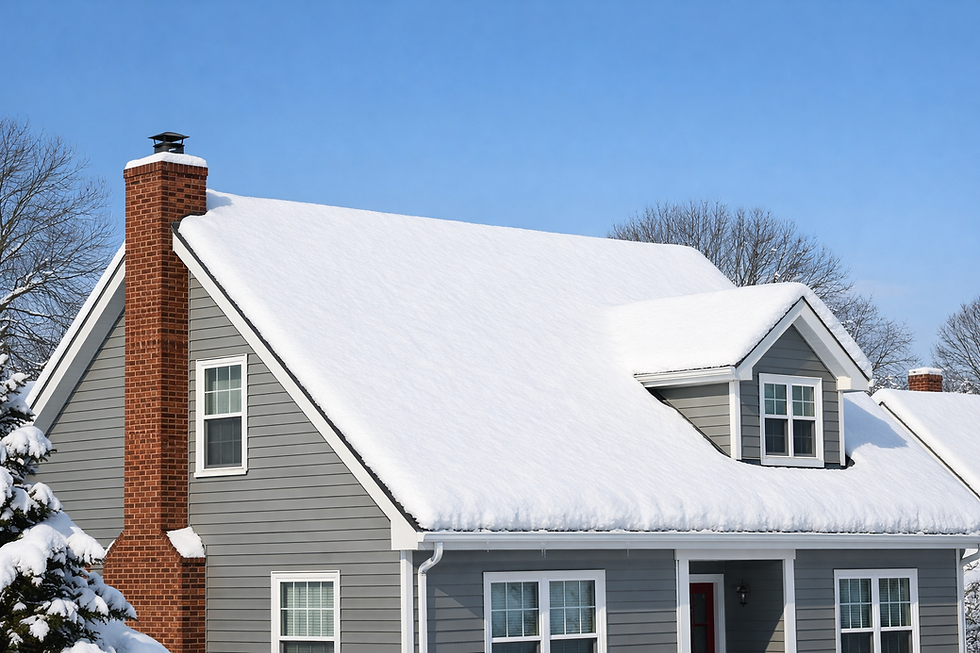
Every time it snows, the same question pops up:
“Should I be worried about all that snow sitting on my roof?”
The short answer?Usually, no.
But sometimes, yes.
Let’s break it down in plain English so you know what’s normal — and what’s not.
First: Snow Itself Isn’t the Enemy
A few inches of snow on your roof is completely normal. Roofs in our area are built to handle snow loads. If your home is structurally sound and your roof system was installed correctly, a standard snowfall shouldn’t cause a problem.
Light, fluffy snow is especially low risk. It looks heavy, but it’s mostly air.
Where issues start is with:
Heavy, wet snow
Ice buildup
Multiple storms stacking on top of each other
Existing roof problems that snow exposes
Snow doesn’t usually create problems. It reveals them.
When Snow Isn’t a Problem
Here’s when you can relax:
1. You Have a Newer Roof (Under 15–20 Years)
If your roof is in good shape and was installed properly, it should handle normal winter conditions without issue.
2. The Snow Is Evenly Distributed
Even coverage is actually a good sign. It means your roof is insulated and ventilated consistently.
3. No Leaks Inside
If your ceilings are dry and there are no new stains, bubbling paint, or drips — that’s a good sign.
4. You Don’t See Ice Building Up at the Edges
Snow sitting there is one thing. Thick ice ridges hanging off your gutters? That’s different.
Most of the time, snow just sits there quietly and melts off gradually. No drama.
When You Should Pay Attention
Now let’s talk about the situations that deserve a closer look.
1. Heavy, Wet Snow (The Back-Breaking Kind)
If you’ve ever shoveled snow that feels like cement, that’s the kind that adds serious weight.
One foot of light snow might not be a big deal. One foot of wet snow can be heavy.
If we get a major storm followed by rain, that combination adds even more weight. Most homes still handle it fine — but flat roofs and older structures should be watched more closely.

2. Ice Dams Forming Along the Gutters
This is the big one.
An ice dam happens when:
Heat escapes from your attic
Snow melts near the top of the roof
Water runs down and refreezes at the colder edges
Ice builds up and traps water behind it
That trapped water can back up under shingles and cause leaks.
Important: Ice dams are usually an insulation and ventilation issue — not just a roofing issue.
If you see thick ridges of ice forming along your gutters while snow is still on the roof, that’s something to address.
3. Icicles Everywhere
A few small icicles? Not a big deal.
Large, thick icicles running the full length of your gutters? That’s usually a sign of uneven heat loss from the attic.
Again, it’s often a ventilation issue.
4. Interior Warning Signs
Snow problems show up inside before outside sometimes.
Watch for:
Water stains on ceilings
Wet drywall
Peeling paint
Dripping around skylights or vents
Musty attic smells
If you notice those, don’t ignore them.
Should You Remove Snow from Your Roof?
In most cases: No.
Climbing onto a snow-covered roof is dangerous. Slips and falls are far more common than roof collapses.
Even using a roof rake from the ground can:
Damage shingles
Pull off granules
Bend gutters
The only time snow removal becomes necessary is typically:
On flat or low-slope roofs with excessive buildup
When multiple heavy storms stack up without melting
When structural concerns already exist
Otherwise, it’s usually best to let it melt naturally.
What Snow Can Reveal About Your Roof
Here’s something most homeowners don’t realize:
Snow can actually show you how your roof is performing.
If snow melts unevenly in patches, that may indicate:
Insulation gaps
Poor attic ventilation
Heat escaping in certain areas
If you see bare spots near the peak but snow at the edges, that’s often the start of ice dam conditions.
In other words, snow acts like a diagnostic tool.

The Real Issue: Ventilation
Nine times out of ten, winter roof problems aren’t caused by the shingles themselves.
They’re caused by:
Poor attic insulation
Improper ventilation
Shortcuts taken during installation
A properly ventilated roof system allows cold air to circulate under the decking, keeping the roof surface temperature consistent. That prevents uneven melting and ice buildup.
This is why ventilation matters just as much as shingles.
Bottom Line
Here’s the honest answer:
Most snow on your roof is normal and not a reason to panic.
You should pay attention if:
Ice dams are forming
You see interior water stains
Snow is extremely heavy and piling up repeatedly
Your roof is older or already compromised
Otherwise, let winter do what winter does.
If You’re Unsure
If you’re standing in your yard staring up at your roof wondering whether you should be concerned, it’s worth getting a professional opinion — especially if your roof is older or you’ve had issues before.
Sometimes peace of mind is worth more than guessing.
If you have questions about your roof this winter, we’re happy to take a look and give you a straight answer.
No scare tactics. No “you need a whole new roof” speech. Just an honest assessment.
Stay safe this winter — and stay off the roof.


Comments